
Family Medicine Residency Program
Community and Program Background

Introduction to Teaching Health Centers & FQHCs
Honor Community Health
Honor Community Health is the largest Federally Qualified Health Center in Oakland County, Michigan, serving nearly 20,000 unduplicated patients annually through 18 health center locations across the county. Honor provides comprehensive, integrated primary, behavioral health, and dental care, and other specialty services, focused on addressing the health and wellness needs of those with little or no access to health care through the provision of high-quality health services.
Honor Community Health was established in 2011 – under the vision and guidance of Oakland Community Health Network (OCHN) – as a community-based 501 (c)(3) providing comprehensive primary care to the vulnerable and medically underserved populations of Oakland County, Michigan – starting with Pontiac and Waterford Township.
On October 31, 2012, Honor Community Health received designation as a Federally Qualified Health Center (FQHC) Look-Alike, allowing us to effectively address the significant gaps in health care provided to homeless individuals and people with mental health needs, as well as work to reduce the sharp gap in life expectancy. Formal FQHC designation was obtained in May 2015.
Federally Qualified Health Centers (FQHCs)
Community health centers, formally called Federally Qualified Health Centers, are community-based and patient-directed organizations that deliver comprehensive primary care and other integrated healthcare services including oral health, behavioral health, substance use and more.
Health centers overcome geographic, cultural, linguistic, and other barriers to care by emphasizing care management of patients with multiple health care needs, providing supportive services such as health education, translation, and transportation that promote access to health care, and using systematic quality improvement approaches, including leveraging health information technology. Health centers operate under the direction of patient-majority governing boards and are organized as public and private non-profit organizations. All health centers provide care in regions or to populations that lack adequate medical services. FQHCs are required to meet and maintain compliance with a strict set of administrative, clinical, and financial requirements which include transparently sharing information about their patients, services, and quality of care.
Most health centers receive Health Center Program federal grant funding to improve the health of vulnerable populations. Some health centers receive funding to focus on special populations including individuals and families experiencing homelessness, migratory and seasonal agricultural workers and residents of public housing. The majority of health center operating funds come from Medicaid, Medicare, private insurance and other healthcare reimbursements. Health centers provide services regardless of patients’ ability to pay and charge for services on a sliding fee scale.
Across the country, health centers serve 1 in 11 residents in the United States, 1 in 8 children, 1 in 5 rural residents, 1 in 3 people living in poverty, and 1 in 4 people without health insurance. Michigan health centers serve over 715,000 patients annually.
Teaching Health Center Graduate Medical Education
Across the nation, fewer and fewer medical school graduates are pursuing careers in primary care – just as many working primary care providers are planning to retire. Teaching Health Centers aim to ensure a viable primary care workforce for low-income communities by providing training at federally qualified health centers and similar sites.
Research shows that residents who train in federally qualified health centers (FQHCs) and Look-Alikes are more likely to practice in communities with significant healthcare needs – and to feel more prepared to do so. Many Teaching Health Centers receive federal funding to support our activities through HRSA’s Teaching Health Center Graduate Medical Education (GME) program. This funding source is essential for the continuation of many Teaching Health Centers programs.
Facts about the Teaching Health Center Program Graduate Medical Education program from the Health Resources and Services Administration (HRSA):
- HRSA’s National Center for Health Workforce Analysis estimates a projected shortage of 35,260 primary care physicians—including family medicine, general internal medicine, geriatrics, and pediatrics—by 2035. Last year, THCGME residents treated over 792,000 patients during more than 1.2 million patient encounters, significantly enhancing access to primary care for populations with inadequate healthcare resources.
- Since 2010 when the THCGME program began, 2,027 new primary care physicians and dentists have completed residencies and entered the workforce. In the 2023-24 academic year, the program is funding the training of over 1,096 residents in 81 community-based residency programs.
More information about the THCGME Program can be found at the following link: https://bhw.hrsa.gov/funding/apply-grant/teaching-health-center-graduate-medical-education
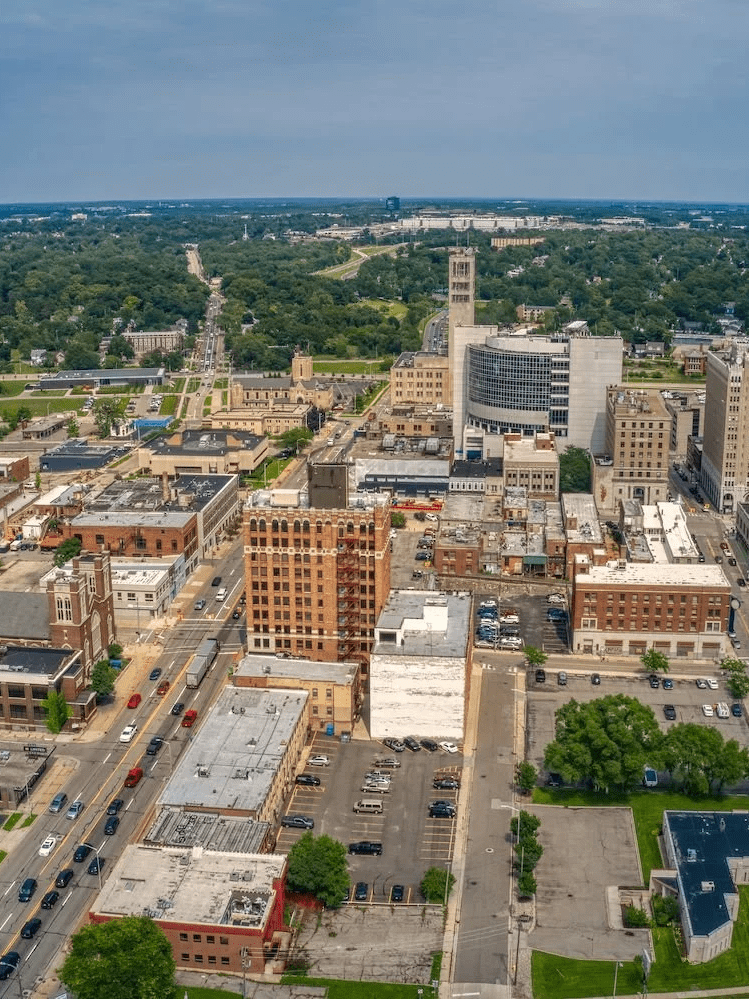
About Pontiac, Michigan
The City of Pontiac, Michigan, is an urban community of approximately 62,000 residents located in the Metro Detroit area. Pontiac is one of the few communities in Oakland County with a predominantly Black and Hispanic population, including 52% identifying as Black/African American, 17% as Hispanic/Latino, and 34% as White.
Despite its proximity to some of the most prosperous areas in the county, Pontiac continues to face significant economic and social challenges. Currently, 31% of residents live in poverty and 50% are considered low-income. This stands in sharp contrast to the broader Oakland County region, which ranks among the wealthiest in the nation.
According to CDC data, Pontiac residents have an average life expectancy that is 20 years lower than that of nearby communities. Factors such as education, employment, transportation, and housing contribute to continued gaps in health and well-being. The city has a 73% high school graduation rate, a 10% unemployment rate, and 17% of residents lack access to a vehicle. The median value of owner-occupied homes is $67,100, with 40.5% of homes being owner-occupied.
Email: [email protected]
Phone: 248-886-4350